Your Help Desk Doesn't Have to Be All In-House to Be All Yours

The fear isn't outside support. It's what leadership pictures when they hear the word "vendor."
6 min read | MSP Owners & IT Directors | White-Label Support
You already know your team needs more support. Tickets stack up during launches. After-hours coverage keeps slipping through the cracks. Your technicians are stretched between fixing what's broken today and building what your organization needs tomorrow.
The operational case for outside help isn't the hard part. The hard part is what happens after you bring it in. Will leadership see a smart capacity decision, or will it look like you handed off a piece of the service you're supposed to own?
That worry is worth taking seriously. But it deserves a real answer, not just reassurance. Here it is: the risk was never outside help. The risk is treating it like a vendor relationship instead of a partnership.
IN THIS ARTICLE
Why distance, not outside help, creates a loss of control
What separates a vendor from a true partner
Why adding capacity doesn't have to mean giving up control
How visibility keeps you connected to your support operation
What makes outside support easier to explain internally
Five questions to ask before choosing a support partner
Distance Is the Problem. Help Isn't.
When people picture "outsourcing," they usually picture the worst version of it. Work gets handed off to another company. Context gets lost somewhere between teams. Clients get bounced through a process without knowing why, and when something breaks, nobody quite agrees on whose job it was to catch it.
That version of outside help genuinely does look like a loss of control. But the loss of control comes from distance, not from getting help in the first place.
A support partner that operates inside your standards, your systems, and your escalation paths isn't a second help desk bolted onto yours. It's an extension of the one you already run. We covered this exact distinction in last week's post on why white-label support is more than a logo: your clients should experience one team, even when more technicians are working behind the scenes.
But there's another side to making that work.
Your clients shouldn't feel the difference, but your MSP still needs visibility into everything happening behind the experience.
The Word "Vendor" Has a Reputation Problem
On a recent episode of The Cool Kids Table Podcast, our guest Lynn Williams, Director of MSP Partnerships & Programs at IBPI - MSP OneShare, talked candidly about why "vendor" carries so much baggage in this industry.
"I kinda feel like when the word vendor comes up, it's like this dirty word. We want to partner with vendors… really creating the relationships and helping to educate and really being a win-win."
That distinction isn't just semantics. A transactional relationship asks: what work can this provider do for us? A partnership asks: what are we trying to accomplish together, and what does each side need to succeed?
And MSPs themselves increasingly recognize the value of that kind of collaboration. In MSP GLOBAL's 2025 State of the Industry research, MSP leaders rated the importance of building trust between MSPs at 4.21 out of 5. Yet more than half said trust or competitive tension was still the biggest barrier to collaboration.
That gap matters. Wanting a partnership and building one you actually trust with part of your client experience are two very different things.
Operationally, that difference shows up everywhere: in how issues get reported, how problems get solved, and how much context a support technician actually has before they pick up a ticket.
[Source: MSP GLOBAL, State of the Industry Report 2025]
Shared Success, Not Shared Invoices
A white-label provider can technically complete the work you send them without ever becoming part of how your MSP operates.
Tickets come in. Tickets get resolved. Reports get sent.
That's a service.
A partnership goes further.
The partner understands what your clients expect, how your team works, where issues should escalate, and what "good" looks like for your MSP. When something isn't working, they don't just close the ticket and move on. They surface it.
That's important when someone else's technicians are representing your business. Their success can't simply be measured by whether they completed the work assigned to them.
Their success has to be connected to yours.
The Capacity Problem You're Already Living
Hiring continues to be one of the top three challenges MSPs face, according to Kaseya's 2024 MSP Benchmark Report, based on responses from roughly 1,000 MSP executives and technicians worldwide. As technology changes, the report found that attracting technicians with the right skills is becoming both harder and more expensive.
[Source: Kaseya, 2024 MSP Benchmark Survey Report]
If you're leading a small technician team, this isn't a controversial opinion. It's a staffing math problem. You can't add headcount every time volume spikes, and you shouldn't have to choose between after-hours coverage and giving your team room to do strategic work instead of constantly reacting to whatever's on fire.
That's exactly why outside capacity can make sense.
The question is whether adding it requires giving up control. It shouldn't.
What Actually Separates a Vendor From a Partner

A vendor can meet the terms of an agreement without ever understanding the bigger picture.
A partner should help you understand that picture better.
That means learning what your clients actually expect, helping you see whether their experience is improving, adapting as your processes change, and surfacing patterns before your team has to ask.
The difference isn't simply how much work they take off your plate.
It's how much better informed you are about the work that's happening.
Control Comes From Visibility, Not From Doing Everything Yourself
There's a quiet assumption behind the fear of outside help: if someone else is doing the work, we must be losing control over it.
But control doesn't come from personally handling every ticket. It comes from knowing what's happening and being able to make informed calls.
In fact, doing everything internally can create the illusion of control. A ticket sitting with one of your own technicians isn't necessarily more controlled if you don't know why it's delayed, why it keeps recurring, or whether the client is getting the experience you expect. Ownership and visibility aren't the same thing as proximity.
At minimum, you should be able to see:
What types of issues are being handled, and how often
Where tickets are actually getting resolved
What's requiring escalation, and why
Where delays or friction show up in the process
Whether the same issues keep recurring
How the client experience is trending over time
Without that visibility, a support partner becomes a black box, and that's when outside help genuinely starts to feel like a loss of control.
With it, added capacity gives you a clearer picture of your support operation than you had before.
Outside Support Should Be Easy to Explain Internally
If leadership asks why another company is involved in delivering support, "we needed more people" doesn't tell the whole story.
The stronger answer is in what the partnership allows your MSP to do.
Maybe you're providing after-hours coverage without building another shift internally. Maybe your senior technicians are spending less time on repetitive issues. Maybe you can absorb changes in ticket volume without constantly changing headcount. Maybe escalations are reaching your team with better context.
Those are operational decisions.
And if you can show what the partner handles, how it's performing, where issues escalate, and what your internal technicians have gained as a result, bringing in outside help doesn't have to look like you've lost control.
It can show that you made a deliberate decision about where your team's time is most valuable.
The goal isn't to hide the fact that you have a partner.
It's to be able to explain exactly why they're there.
Look for a Partner Who Will Tell You the Truth
One of Lynn's most useful observations on the podcast had nothing to do with support specifically. It was about the value of surrounding yourself with people who'll actually give you real feedback.
"I really appreciate hearing from the people who are like, 'You know what? This would've probably been better.' Surrounding yourself with a diverse group of people that know it's safe to actually give you real feedback is important."
A good partner shouldn't just agree with every decision you make. They should understand your goals well enough to flag a better way to hit them, whether that's a ticket type that keeps escalating, a process that's creating friction after hours, or a gap in documentation that's driving repeat requests.
That kind of feedback doesn't take control away from your MSP. It gives you more information to decide what needs to change.
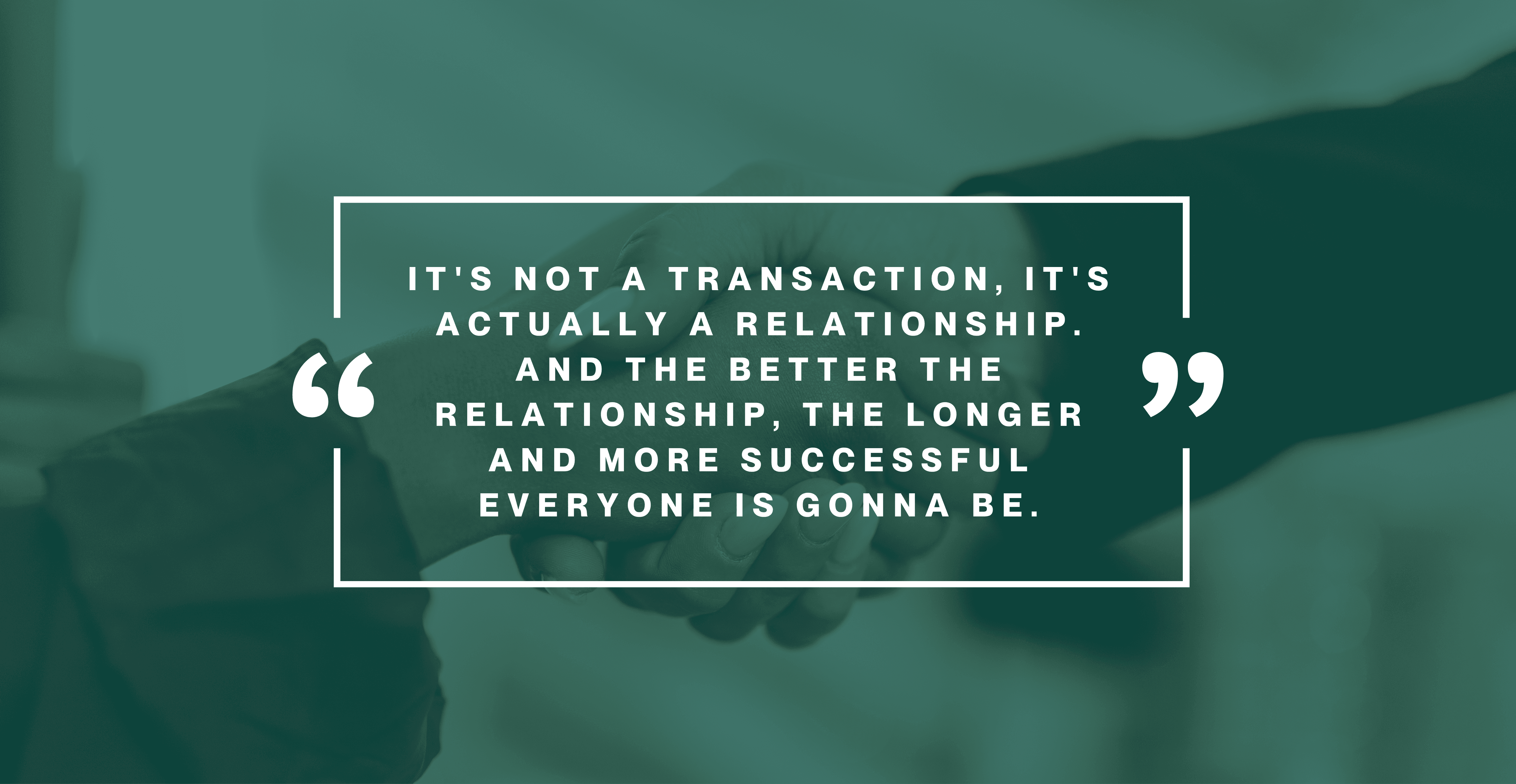
As Lynn summed it up:
ACTIONABLE TAKEAWAY
Before You Sign: The Vendor-or-Partner Test
Run any support partner through these five questions before you bring the recommendation to leadership.

Outside Support Should Extend Your Control, Not Replace It
Your client relationships, your standards, and your strategic decisions stay yours no matter who's helping you deliver on them.
The question isn't whether someone outside your MSP handles a ticket. It's whether you've built a relationship with enough visibility, shared accountability, and honesty that you remain firmly in control of the service being delivered.
A vendor gives you somewhere else to send work.
A partner operates within the support organization you've already built and helps you make it stronger.
That's the difference leadership should notice.
Helpt provides 24/7 U.S.-based technical support designed to operate as an extension of your team, inside your systems, processes, and client experience.
About the Author

Michelle Burnham has worked in and around the technology industry for nearly a decade; collaborating with IT support teams and contributing to technical documentation, service-oriented content, and operational communications. With a background in editing, formatting, and visual design, she specializes in translating complex ideas into clear, engaging content. In addition to her freelance creative work, she serves as a contract graphic designer, copywriter, and video editor for Helpt.
The fear isn't outside support. It's what leadership pictures when they hear the word "vendor."
6 min read | MSP Owners & IT Directors | White-Label Support
You already know your team needs more support. Tickets stack up during launches. After-hours coverage keeps slipping through the cracks. Your technicians are stretched between fixing what's broken today and building what your organization needs tomorrow.
The operational case for outside help isn't the hard part. The hard part is what happens after you bring it in. Will leadership see a smart capacity decision, or will it look like you handed off a piece of the service you're supposed to own?
That worry is worth taking seriously. But it deserves a real answer, not just reassurance. Here it is: the risk was never outside help. The risk is treating it like a vendor relationship instead of a partnership.
IN THIS ARTICLE
Why distance, not outside help, creates a loss of control
What separates a vendor from a true partner
Why adding capacity doesn't have to mean giving up control
How visibility keeps you connected to your support operation
What makes outside support easier to explain internally
Five questions to ask before choosing a support partner
Distance Is the Problem. Help Isn't.
When people picture "outsourcing," they usually picture the worst version of it. Work gets handed off to another company. Context gets lost somewhere between teams. Clients get bounced through a process without knowing why, and when something breaks, nobody quite agrees on whose job it was to catch it.
That version of outside help genuinely does look like a loss of control. But the loss of control comes from distance, not from getting help in the first place.
A support partner that operates inside your standards, your systems, and your escalation paths isn't a second help desk bolted onto yours. It's an extension of the one you already run. We covered this exact distinction in last week's post on why white-label support is more than a logo: your clients should experience one team, even when more technicians are working behind the scenes.
But there's another side to making that work.
Your clients shouldn't feel the difference, but your MSP still needs visibility into everything happening behind the experience.
The Word "Vendor" Has a Reputation Problem
On a recent episode of The Cool Kids Table Podcast, our guest Lynn Williams, Director of MSP Partnerships & Programs at IBPI - MSP OneShare, talked candidly about why "vendor" carries so much baggage in this industry.
"I kinda feel like when the word vendor comes up, it's like this dirty word. We want to partner with vendors… really creating the relationships and helping to educate and really being a win-win."
That distinction isn't just semantics. A transactional relationship asks: what work can this provider do for us? A partnership asks: what are we trying to accomplish together, and what does each side need to succeed?
And MSPs themselves increasingly recognize the value of that kind of collaboration. In MSP GLOBAL's 2025 State of the Industry research, MSP leaders rated the importance of building trust between MSPs at 4.21 out of 5. Yet more than half said trust or competitive tension was still the biggest barrier to collaboration.
That gap matters. Wanting a partnership and building one you actually trust with part of your client experience are two very different things.
Operationally, that difference shows up everywhere: in how issues get reported, how problems get solved, and how much context a support technician actually has before they pick up a ticket.
[Source: MSP GLOBAL, State of the Industry Report 2025]
Shared Success, Not Shared Invoices
A white-label provider can technically complete the work you send them without ever becoming part of how your MSP operates.
Tickets come in. Tickets get resolved. Reports get sent.
That's a service.
A partnership goes further.
The partner understands what your clients expect, how your team works, where issues should escalate, and what "good" looks like for your MSP. When something isn't working, they don't just close the ticket and move on. They surface it.
That's important when someone else's technicians are representing your business. Their success can't simply be measured by whether they completed the work assigned to them.
Their success has to be connected to yours.
The Capacity Problem You're Already Living
Hiring continues to be one of the top three challenges MSPs face, according to Kaseya's 2024 MSP Benchmark Report, based on responses from roughly 1,000 MSP executives and technicians worldwide. As technology changes, the report found that attracting technicians with the right skills is becoming both harder and more expensive.
[Source: Kaseya, 2024 MSP Benchmark Survey Report]
If you're leading a small technician team, this isn't a controversial opinion. It's a staffing math problem. You can't add headcount every time volume spikes, and you shouldn't have to choose between after-hours coverage and giving your team room to do strategic work instead of constantly reacting to whatever's on fire.
That's exactly why outside capacity can make sense.
The question is whether adding it requires giving up control. It shouldn't.
What Actually Separates a Vendor From a Partner
A vendor can meet the terms of an agreement without ever understanding the bigger picture.
A partner should help you understand that picture better.
That means learning what your clients actually expect, helping you see whether their experience is improving, adapting as your processes change, and surfacing patterns before your team has to ask.
The difference isn't simply how much work they take off your plate.
It's how much better informed you are about the work that's happening.
Control Comes From Visibility, Not From Doing Everything Yourself
There's a quiet assumption behind the fear of outside help: if someone else is doing the work, we must be losing control over it.
But control doesn't come from personally handling every ticket. It comes from knowing what's happening and being able to make informed calls.
In fact, doing everything internally can create the illusion of control. A ticket sitting with one of your own technicians isn't necessarily more controlled if you don't know why it's delayed, why it keeps recurring, or whether the client is getting the experience you expect. Ownership and visibility aren't the same thing as proximity.
At minimum, you should be able to see:
What types of issues are being handled, and how often
Where tickets are actually getting resolved
What's requiring escalation, and why
Where delays or friction show up in the process
Whether the same issues keep recurring
How the client experience is trending over time
Without that visibility, a support partner becomes a black box, and that's when outside help genuinely starts to feel like a loss of control.
With it, added capacity gives you a clearer picture of your support operation than you had before.
Outside Support Should Be Easy to Explain Internally
If leadership asks why another company is involved in delivering support, "we needed more people" doesn't tell the whole story.
The stronger answer is in what the partnership allows your MSP to do.
Maybe you're providing after-hours coverage without building another shift internally. Maybe your senior technicians are spending less time on repetitive issues. Maybe you can absorb changes in ticket volume without constantly changing headcount. Maybe escalations are reaching your team with better context.
Those are operational decisions.
And if you can show what the partner handles, how it's performing, where issues escalate, and what your internal technicians have gained as a result, bringing in outside help doesn't have to look like you've lost control.
It can show that you made a deliberate decision about where your team's time is most valuable.
The goal isn't to hide the fact that you have a partner.
It's to be able to explain exactly why they're there.
Look for a Partner Who Will Tell You the Truth
One of Lynn's most useful observations on the podcast had nothing to do with support specifically. It was about the value of surrounding yourself with people who'll actually give you real feedback.
"I really appreciate hearing from the people who are like, 'You know what? This would've probably been better.' Surrounding yourself with a diverse group of people that know it's safe to actually give you real feedback is important."
A good partner shouldn't just agree with every decision you make. They should understand your goals well enough to flag a better way to hit them, whether that's a ticket type that keeps escalating, a process that's creating friction after hours, or a gap in documentation that's driving repeat requests.
That kind of feedback doesn't take control away from your MSP. It gives you more information to decide what needs to change.
As Lynn summed it up:
ACTIONABLE TAKEAWAY
Before You Sign: The Vendor-or-Partner Test
Run any support partner through these five questions before you bring the recommendation to leadership.
Outside Support Should Extend Your Control, Not Replace It
Your client relationships, your standards, and your strategic decisions stay yours no matter who's helping you deliver on them.
The question isn't whether someone outside your MSP handles a ticket. It's whether you've built a relationship with enough visibility, shared accountability, and honesty that you remain firmly in control of the service being delivered.
A vendor gives you somewhere else to send work.
A partner operates within the support organization you've already built and helps you make it stronger.
That's the difference leadership should notice.
Helpt provides 24/7 U.S.-based technical support designed to operate as an extension of your team, inside your systems, processes, and client experience.
About the Author
Michelle Burnham has worked in and around the technology industry for nearly a decade; collaborating with IT support teams and contributing to technical documentation, service-oriented content, and operational communications. With a background in editing, formatting, and visual design, she specializes in translating complex ideas into clear, engaging content. In addition to her freelance creative work, she serves as a contract graphic designer, copywriter, and video editor for Helpt.
Stop Answering Calls.
Start Driving Growth.
Let Helpt's US-based technicians handle your support calls 24x7 while your team focuses on what matters most.
Stop Answering Calls.
Start Driving Growth.
Let Helpt's US-based technicians handle your support calls 24x7 while your team focuses on what matters most.
Stop Answering Calls.
Start Driving Growth.
Let Helpt's US-based technicians handle your support calls 24x7 while your team focuses on what matters most.
©2026 Helpt, a part of PAG Technology Inc. All Rights Reserved.