White-Label Support Is More Than a Logo

Your clients should experience one support team, no matter how many people are working behind it.
~6 min read · MSP Owners & IT Directors · White-Label Support
IN THIS ARTICLE
Why support becomes part of your brand
How small inconsistencies can quietly change client perception
Why white-labeling goes much deeper than logos and greetings
How to define support standards an outside partner can follow
What to look for in a white-label help desk provider
How to tell whether outside support actually feels like your team
Your help desk is one of the most frequent touchpoints your clients have with your brand. Not your website, proposal, or onboarding deck. When something breaks, a ticket sits too long, or follow-up is inconsistent, that's your brand talking.
So when you need outside support to handle growing ticket volume, after-hours coverage, or overflow, the question isn't simply whether another team can close the tickets. It's whether you can add people behind the experience without changing the experience itself.
That's what good white-label support should accomplish.
When Support Becomes the Brand
Your website can say you're responsive. Your sales team can promise a great experience. Your onboarding process can reinforce it. But the real test starts when something isn't working.
For many clients, support is one of the most frequent interactions they'll have with your company after the sale. Over time, they learn what to expect: how quickly your team responds, how your technicians communicate, how much context they already have, and what happens when an issue needs to go somewhere else.
That means the risk of adding outside support isn't the fact that another team is involved. It's changing an experience your clients have already learned to trust.
If your help desk can't scale, eventually the experience suffers. But adding capacity only solves the problem if the experience can scale with it. As we've written about before, consistency matters more than capacity in MSP support because clients aren't evaluating your staffing model. They're evaluating what it's like to work with you.
The Cost of “Something Feels Different”
When a client has worked with your MSP long enough, they build a mental model of your service. They know how your team communicates, how much explanation they'll receive, what happens after an escalation, and whether they'll need to follow up or can trust that someone else is keeping the ticket moving.
Then an interaction breaks that pattern. Maybe the technician asks for information your team normally already has. The next update doesn't come when the client expects it. An escalation feels more like starting over than moving forward.
None of those moments is catastrophic. The ticket might even get resolved on time. But something feels different.
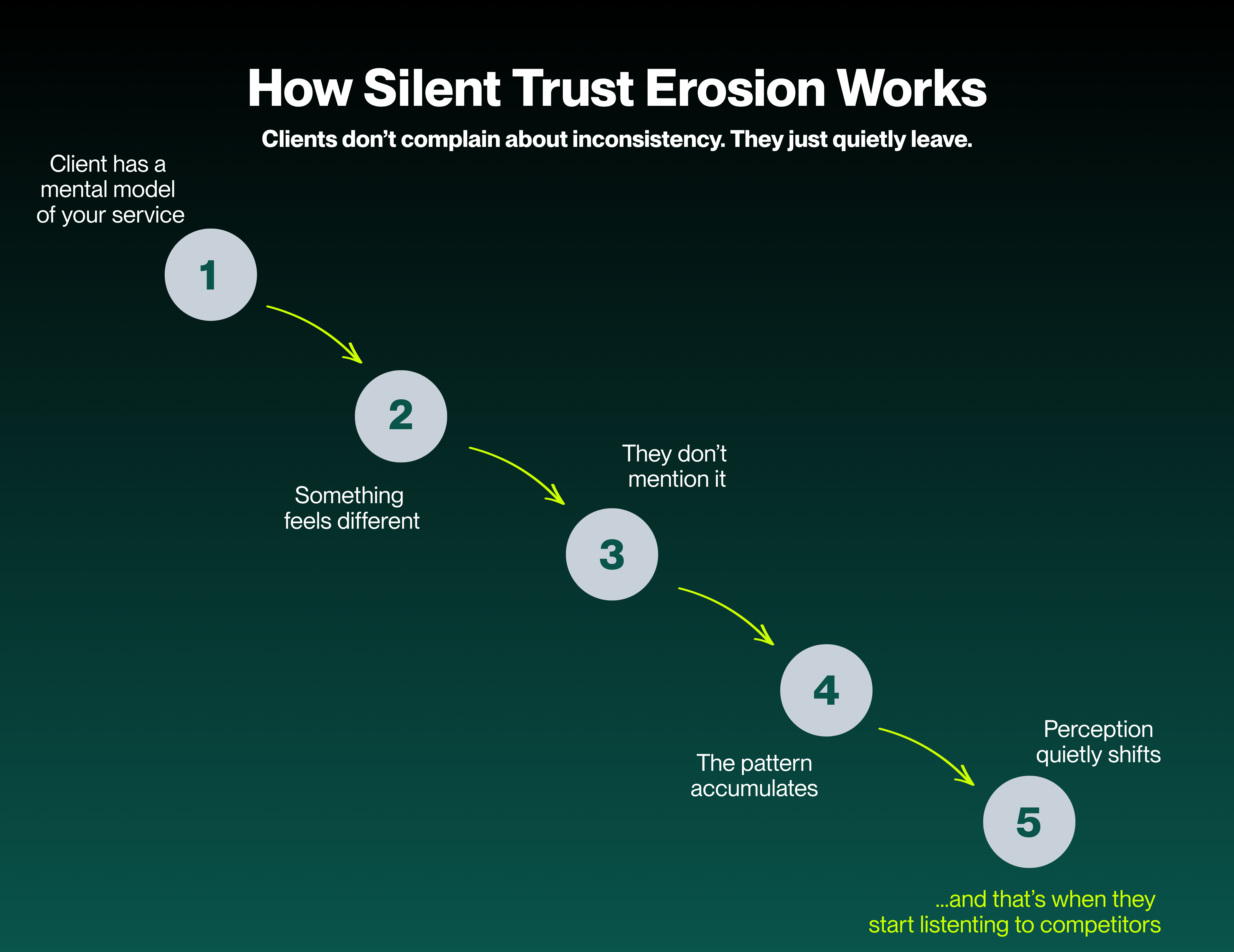
That's where inconsistency starts to matter. According to PwC's 2025 Customer Experience Survey, 29% of consumers stopped using or buying from a brand because of a poor customer experience.
Most clients aren't going to tell you that a support interaction felt slightly off. They'll simply add it to the picture they're forming of your service. One interaction probably won't change that picture, but enough of them can.
23% of SMEs have terminated relationships with MSPs specifically because of poor customer service.
SOURCE: JumpCloud, 2024 SME IT Trends
The experience is part of what your clients are paying for. If outside support changes that experience, adding capacity may have solved one problem while quietly creating another.
Surface Branding vs. Operational Invisibility
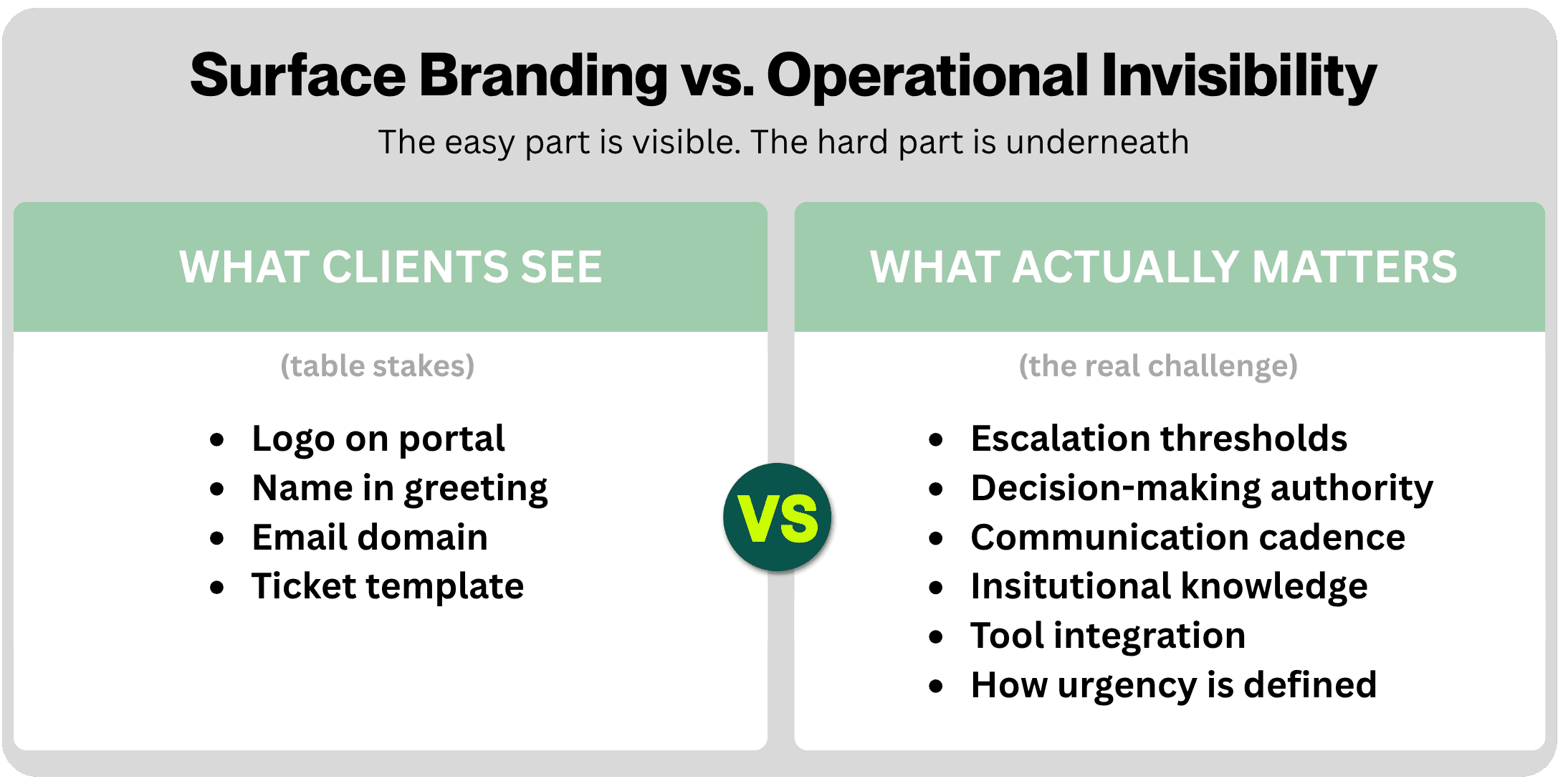
White-labeling the visible parts of support is relatively easy. A provider can use your name, answer with your greeting, send from your domain, and work from a branded ticket template.
Those details matter, but they don't determine whether the experience actually feels like your team.
The harder work happens underneath. Your internal technicians make dozens of judgment calls based on context they've built over time: when an issue deserves more urgency than its priority suggests, how long a client is comfortable waiting for an update, when to keep troubleshooting, and when it's time to bring someone else in.
A white-label partner needs enough context and authority to make those decisions without constantly falling back on your internal team. Otherwise, you may have successfully hidden the vendor's name while creating a very visible difference in how support operates.
That's the distinction between looking white-label and actually functioning white-label.
The goal isn't to recreate every habit of your internal help desk. It's to define the parts of your support experience that shouldn't change based on who happens to pick up the ticket.
When those standards carry across both teams, clients don't have to adjust to a different process, communication style, or level of ownership. They simply get the experience they've come to expect from you.
Don't Make Your Partner Guess What “Good” Looks Like
Your internal team probably follows dozens of support rules that have never actually been written down. They know which clients want the short answer and which want every detail. They know when a routine-looking issue is going to bring someone's workday to a stop. They know how much ownership to take before escalating, how often to communicate when an issue is still open, and what “urgent” actually means for different customers.
That's institutional knowledge, and an outside team doesn't inherit it when you sign a contract.
Before a white-label partner starts interacting with clients, turn the knowledge that lives in your team's heads into standards someone else can actually follow.
What to document before you go live
How your team communicates, including terminology you use or avoid
What a useful status update should contain and when clients should receive one
What context technicians should review before responding
Where technicians have authority to make a decision independently
What requires escalation and who takes ownership when it happens
How your most common ticket types should be handled
Customer-specific expectations that meaningfully change the support experience
“Be professional and friendly” isn't a support standard. Neither is “use your best judgment.” The more clearly you define what good support looks like inside your organization, the less your outside partner has to fill in the blanks with their own way of doing things.
Vetting a Partner Who Can Be Invisible
Not every provider that offers “white-label support” means the same thing by it. So don't spend much time asking whether they can white-label. Find out how deeply they're willing and able to operate inside your existing support model.
Ask before you sign
Will technicians work directly inside your PSA, RMM, and documentation tools?
How is customer-specific context made available to the technician handling the ticket?
Can escalation rules and decision boundaries be customized to your operation?
How are technicians trained on your communication expectations?
How does QA account for more than technical resolution?
What does the handoff look like when a ticket moves outside the partner's scope?
How much changes when your processes or customer requirements change?
Pay particular attention to the answers that begin with “we normally...”
A white-label partner will obviously have its own processes. But if every answer requires you to conform to how their help desk works, you're not really extending your support operation. You're connecting your clients to someone else's.
Can Your Clients Tell the Difference?
Once outside support is live, don't reduce success to response time, resolution time, and ticket volume. Those tell you whether the partner is performing, but they don't necessarily tell you whether the partnership is working.
Instead, look for the places where the seam starts to show:
Are clients repeating information that should already be available?
Are internal technicians routinely filling in missing context after escalation?
Is there a noticeable CSAT difference based on who handles the ticket?
Are tickets bouncing back and forth before reaching the right owner?
Are clients beginning to request specific technicians?
Is your team frequently correcting communication before or after it reaches a client?
Individually, none of these means the model isn't working. Patterns do.
If your internal team is constantly smoothing over the experience behind the scenes, you haven't really added seamless capacity. You've added another layer for your team to manage.
More Capacity Shouldn't Mean a Different Experience
Your clients don't need to know how many people sit behind their support experience. They need to know that when they reach out, the person answering has the context, authority, and understanding to help.
That's the standard for white-label support: not simply putting another company's technicians behind your name, but extending the experience your clients already trust. When it's working, clients shouldn't be thinking about who handled the ticket at all. They should simply think your support got better.
Looking for white-label support without the seams?
Helpt provides 24/7 U.S.-based technical support designed to work as an extension of your team, inside your systems, processes, and customer experience.
Your clients should experience one support team, no matter how many people are working behind it.
~6 min read · MSP Owners & IT Directors · White-Label Support
IN THIS ARTICLE
Why support becomes part of your brand
How small inconsistencies can quietly change client perception
Why white-labeling goes much deeper than logos and greetings
How to define support standards an outside partner can follow
What to look for in a white-label help desk provider
How to tell whether outside support actually feels like your team
Your help desk is one of the most frequent touchpoints your clients have with your brand. Not your website, proposal, or onboarding deck. When something breaks, a ticket sits too long, or follow-up is inconsistent, that's your brand talking.
So when you need outside support to handle growing ticket volume, after-hours coverage, or overflow, the question isn't simply whether another team can close the tickets. It's whether you can add people behind the experience without changing the experience itself.
That's what good white-label support should accomplish.
When Support Becomes the Brand
Your website can say you're responsive. Your sales team can promise a great experience. Your onboarding process can reinforce it. But the real test starts when something isn't working.
For many clients, support is one of the most frequent interactions they'll have with your company after the sale. Over time, they learn what to expect: how quickly your team responds, how your technicians communicate, how much context they already have, and what happens when an issue needs to go somewhere else.
That means the risk of adding outside support isn't the fact that another team is involved. It's changing an experience your clients have already learned to trust.
If your help desk can't scale, eventually the experience suffers. But adding capacity only solves the problem if the experience can scale with it. As we've written about before, consistency matters more than capacity in MSP support because clients aren't evaluating your staffing model. They're evaluating what it's like to work with you.
The Cost of “Something Feels Different”
When a client has worked with your MSP long enough, they build a mental model of your service. They know how your team communicates, how much explanation they'll receive, what happens after an escalation, and whether they'll need to follow up or can trust that someone else is keeping the ticket moving.
Then an interaction breaks that pattern. Maybe the technician asks for information your team normally already has. The next update doesn't come when the client expects it. An escalation feels more like starting over than moving forward.
None of those moments is catastrophic. The ticket might even get resolved on time. But something feels different.
That's where inconsistency starts to matter. According to PwC's 2025 Customer Experience Survey, 29% of consumers stopped using or buying from a brand because of a poor customer experience.
Most clients aren't going to tell you that a support interaction felt slightly off. They'll simply add it to the picture they're forming of your service. One interaction probably won't change that picture, but enough of them can.
23% of SMEs have terminated relationships with MSPs specifically because of poor customer service.
SOURCE: JumpCloud, 2024 SME IT Trends
The experience is part of what your clients are paying for. If outside support changes that experience, adding capacity may have solved one problem while quietly creating another.
Surface Branding vs. Operational Invisibility
White-labeling the visible parts of support is relatively easy. A provider can use your name, answer with your greeting, send from your domain, and work from a branded ticket template.
Those details matter, but they don't determine whether the experience actually feels like your team.
The harder work happens underneath. Your internal technicians make dozens of judgment calls based on context they've built over time: when an issue deserves more urgency than its priority suggests, how long a client is comfortable waiting for an update, when to keep troubleshooting, and when it's time to bring someone else in.
A white-label partner needs enough context and authority to make those decisions without constantly falling back on your internal team. Otherwise, you may have successfully hidden the vendor's name while creating a very visible difference in how support operates.
That's the distinction between looking white-label and actually functioning white-label.
The goal isn't to recreate every habit of your internal help desk. It's to define the parts of your support experience that shouldn't change based on who happens to pick up the ticket.
When those standards carry across both teams, clients don't have to adjust to a different process, communication style, or level of ownership. They simply get the experience they've come to expect from you.
Don't Make Your Partner Guess What “Good” Looks Like
Your internal team probably follows dozens of support rules that have never actually been written down. They know which clients want the short answer and which want every detail. They know when a routine-looking issue is going to bring someone's workday to a stop. They know how much ownership to take before escalating, how often to communicate when an issue is still open, and what “urgent” actually means for different customers.
That's institutional knowledge, and an outside team doesn't inherit it when you sign a contract.
Before a white-label partner starts interacting with clients, turn the knowledge that lives in your team's heads into standards someone else can actually follow.
What to document before you go live
How your team communicates, including terminology you use or avoid
What a useful status update should contain and when clients should receive one
What context technicians should review before responding
Where technicians have authority to make a decision independently
What requires escalation and who takes ownership when it happens
How your most common ticket types should be handled
Customer-specific expectations that meaningfully change the support experience
“Be professional and friendly” isn't a support standard. Neither is “use your best judgment.” The more clearly you define what good support looks like inside your organization, the less your outside partner has to fill in the blanks with their own way of doing things.
Vetting a Partner Who Can Be Invisible
Not every provider that offers “white-label support” means the same thing by it. So don't spend much time asking whether they can white-label. Find out how deeply they're willing and able to operate inside your existing support model.
Ask before you sign
Will technicians work directly inside your PSA, RMM, and documentation tools?
How is customer-specific context made available to the technician handling the ticket?
Can escalation rules and decision boundaries be customized to your operation?
How are technicians trained on your communication expectations?
How does QA account for more than technical resolution?
What does the handoff look like when a ticket moves outside the partner's scope?
How much changes when your processes or customer requirements change?
Pay particular attention to the answers that begin with “we normally...”
A white-label partner will obviously have its own processes. But if every answer requires you to conform to how their help desk works, you're not really extending your support operation. You're connecting your clients to someone else's.
Can Your Clients Tell the Difference?
Once outside support is live, don't reduce success to response time, resolution time, and ticket volume. Those tell you whether the partner is performing, but they don't necessarily tell you whether the partnership is working.
Instead, look for the places where the seam starts to show:
Are clients repeating information that should already be available?
Are internal technicians routinely filling in missing context after escalation?
Is there a noticeable CSAT difference based on who handles the ticket?
Are tickets bouncing back and forth before reaching the right owner?
Are clients beginning to request specific technicians?
Is your team frequently correcting communication before or after it reaches a client?
Individually, none of these means the model isn't working. Patterns do.
If your internal team is constantly smoothing over the experience behind the scenes, you haven't really added seamless capacity. You've added another layer for your team to manage.
More Capacity Shouldn't Mean a Different Experience
Your clients don't need to know how many people sit behind their support experience. They need to know that when they reach out, the person answering has the context, authority, and understanding to help.
That's the standard for white-label support: not simply putting another company's technicians behind your name, but extending the experience your clients already trust. When it's working, clients shouldn't be thinking about who handled the ticket at all. They should simply think your support got better.
Looking for white-label support without the seams?
Helpt provides 24/7 U.S.-based technical support designed to work as an extension of your team, inside your systems, processes, and customer experience.
Stop Answering Calls.
Start Driving Growth.
Let Helpt's US-based technicians handle your support calls 24x7 while your team focuses on what matters most.
Stop Answering Calls.
Start Driving Growth.
Let Helpt's US-based technicians handle your support calls 24x7 while your team focuses on what matters most.
Stop Answering Calls.
Start Driving Growth.
Let Helpt's US-based technicians handle your support calls 24x7 while your team focuses on what matters most.
©2026 Helpt, a part of PAG Technology Inc. All Rights Reserved.